
For CTOs / Technical Decision-Makers · Beginner · Commercial · Solves: Afraid of vendor lock-in, Cannot edit the Webflow site, Agency owns the workspace
Key takeaways
- Workspace and domain ownership belong to your company on day one.
- A usable Editor and CMS model matter more than the homepage animation.
- Undocumented custom code is lock-in.
- Interview agencies with a scoring card, not a mood board.
Agency lock-in only
This page does not tell you how to hire a freelancer. That is what to look for in a Webflow developer. There is no third Webflow-hire URL.
- You are workspace owner on day one.
- CMS collections are documented and transferable.
- They will export or migrate without a hostage fee.
Most 'webflow agency' pages are a gallery. That is not how you hire. You are buying a system you will live inside: CMS, roles, hosting, client-editors, and whatever custom code the team leaves behind.
The expensive mistake is not picking a mid-tier studio. The expensive mistake is signing a build that only that studio can edit. Locked-in Webflow sites are common. They look fine in the portfolio. They are painful the first time your marketing lead wants a new CMS field.
Here is how I would choose a Webflow agency if I were the buyer, not the builder.
What you are actually buying
A Webflow agency should ship a site your team can operate. That means class naming you can follow, a CMS model that matches real content, and documentation for the parts that are not native Webflow. If the pitch is only 'we will make it beautiful,' you are hiring a decorator.
- Design that can be maintained without the original designer in the file.
- CMS collections with field names a marketer can understand.
- SEO fields that are actually wired: title, description, canonical, OG, schema.
- A handoff that includes Editor vs Designer access, not a mystery admin seat.
The lock-in patterns to ask about on the first call
Custom code nobody else can touch
Webflow is fine with custom embeds and code components. The question is whether the agency documented them. If the site depends on an undocumented GitHub repo, a private npm package, or a contractor's laptop, you do not own the site.
Client-editor theater
Ask to see the Editor experience for a non-technical user. If every copy change requires Designer access, you will pay the agency forever for headlines.
Hosting and account ownership
The Webflow workspace, the project, the custom domain, and the billing should sit under your company. Agency-owned workspaces are how sites get held hostage during a breakup. Get this in writing before kickoff.
Class systems you cannot extend
A strict client-first or custom system is good if they teach it. It is lock-in if only two people on earth understand the combo classes. Ask who will train your team.
If you cannot add a CMS item without a Slack message, you did not buy a website. You bought a retainer.
Questions that separate operators from demo artists
- Who owns the Webflow workspace on day one?
- How do you name classes, and can my team add a page without breaking the nav?
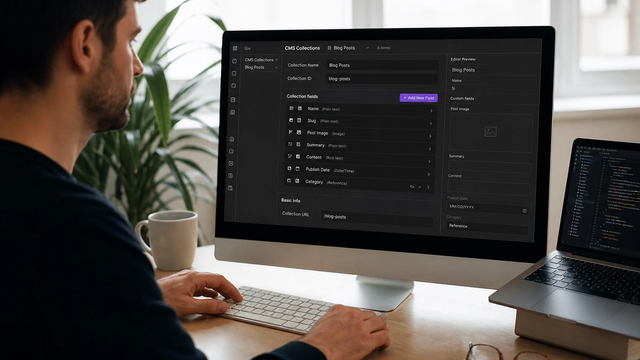
- Show me the CMS schema for a blog or case study before you design the first page.
- Where do title tags, canonicals, and schema live? In the page, in the CMS, or in an embed?
- What happens to 301s if we change slugs later?
- Which interactions die if I turn off one script?
- How do you handle staging, backups, and rollback?
Webflow-specific SEO the agency should already know
Webflow can rank. It can also ship duplicate home URLs, messy pagination, and CMS items without unique titles. A serious partner will talk about:
- Canonical tags on CMS templates.
- Sitemap contents after you hide a collection.
- 301 maps when you migrate from WordPress or Webflow's older slug pattern.
- Image CDN sizing so LCP is not a 4000px hero.
- Avoiding a second domain on the Webflow.io subdomain remaining indexable.
Webflow's own SEO and site settings docs are public in Webflow University. If the agency cannot explain those settings without a sales deck, keep looking.
Agency, freelancer, or certified partner
Certified Partner is a useful signal. It is not a substitute for a technical interview. A strong freelancer with a written handoff can beat a 40-person shop that outsources Webflow to a junior. A strong agency is better when you need brand, motion, CMS, and a launch team in the same month.
I work independently through ZedNova Studios and I still tell buyers to prefer the team that can show a CMS model and a redirect sheet over the team with the flashiest home page animation.
How to keep optionality after you hire
- Put workspace ownership in the contract.
- Require a written component inventory.
- Require a 60-minute recorded handoff.
- Keep a static export or backup after major releases.
- Do not let all custom logic live in one undocumented embed.
A simple scoring card
Score each candidate 1 to 5 on: ownership, CMS quality, SEO implementation, documentation, performance, and post-launch support. Ignore the mood-board. The highest score on ownership plus CMS is usually the adult in the room.
If you are still choosing the platform itself, read Framer vs Webflow for growth-stage teams. Hire after the platform decision, not before.
If you want a build you can keep after the contract ends, that is the work I take. Send the current site and I will tell you where the lock-in already is.
If you are hiring a person rather than a studio, the lock-in questions still apply. I wrote what to look for in a Webflow developer for CMS, SEO fields, and custom-code hygiene on an individual hire.
Implementation table
| Fix | Problem | What to change | Metric | Tool |
|---|---|---|---|---|
| Workspace transfer | Agency-owned project | Move project under company billing | You can add seats | Webflow workspace settings |
| Editor test | Marketers blocked | Have a non-designer edit a CMS item in the interview | Task completed unaided | Webflow Editor |
| Code inventory | Hidden embeds | List every custom script and repo | Zero undocumented embeds | Project audit |
Want a Webflow build you can keep?
Send the current site or the agency proposal. I will point at the lock-in before you sign.
Book a Webflow reviewSources & references