Business & FreelancingUpdated 7 min read

AI Search Optimization Guide for Service Businesses

AI search optimization for agencies, consultants, and studios: service pages, proof, visible FAQs, and a booking path. Not a SaaS content-factory playbook.

Consultant workspace with a services page, case study printout, and booking calendar on screen

For Agency owners, Consultants, Studio founders, Marketing leads · Intermediate · Informational · Solves: SaaS SEO advice that does not fit, Vague service pages, Proof that cannot be cited

Key takeaways

  • Service businesses need four quoteable templates: services, proof, FAQs, booking.
  • Write the offer the way you say it on a call, in HTML a crawler can fetch.
  • Keep FAQs as visible content. Do not chase retired Google FAQ rich results.
  • A citation that cannot start an engagement is an incomplete win.

Most AI search guides are written for SaaS blogs with a hundred articles and a product-led growth loop. Service businesses do not have that machine. You have a services page, a handful of proof pages, an about page, and a way to book.

AI search optimization for an agency, a consultant, or a studio is not a content factory. It is making those few commercial pages answer the questions a buyer already asks, in language a crawler can fetch and a model can quote without inventing your offer.

The B2B architecture playbook still applies at a smaller scale. The hub is AEO strategy for B2B sites. This page is for service firms whose 'content cluster' is really four templates and a Calendly link.

Why service sites lose the answer

The homepage explains the vibe. The services page lists six capabilities with no scope. Proof is a logo strip. FAQs are either missing or stuffed into schema that never rendered. The booking page is a naked form. A model looking for 'what does this studio actually do, for whom, and what happens after I enquire' has nothing clean to quote.

Buyers still search that way. They ask who to hire, what the engagement looks like, whether Webflow or a custom build is the right move, and how to avoid lock-in. If your site does not settle those questions, the answer engines will settle them with whoever did.

You do not need 80 blog posts. You need the service page to tell the truth, the proof to be specific, and the next step to be obvious.

The four pages that do the work

  1. Services: what you do, who it is for, what you will not take, how the engagement runs.
  2. Proof: a case or project narrative with context, not only screenshots.
  3. FAQs: real objections, visible as text on the page that owns the topic.
  4. Booking or contact: the same offer restated, with friction removed.

About supports those four. Blog posts support them when they answer a question sales already hears. A blog that never links back to the offer is a magazine, not a service-business site.

Skip the SaaS playbook pieces that do not map. You do not need a comparison matrix of 14 competitors if you are a 2-person studio. You do not need a changelog. You do not need 40 programmatic location pages for cities you will not visit. You need the pages a buyer opens after they already suspect they might hire someone like you.

If you sell more than one offer, give each offer a URL. 'Services' as a dumping ground for branding, SEO, Webflow, and fractional CTO work is how none of those offers get retrieved cleanly. The hub article is about one URL per question. On a service site, that often means one URL per offer plus one URL per stubborn objection.

Service pages that can be quoted

Write the offer like you would on a call. 'We rebuild marketing sites in Next.js and Webflow, protect the URL space during the move, and leave you with a CMS your team can edit.' That sentence is usable. 'We craft digital experiences' is not.

Usable also means you name the deliverable. Rebuild, migration, retainers, a 15-minute audit call: pick the thing a stranger can book. If the service page lists capabilities and never names a starting engagement, neither a buyer nor a model knows what happens next. The next step is part of the answer, not a footer link.

Put scope, process, timeline language you can stand behind, and a who-it-is-not-for section. Models and humans both use those boundaries. If every industry is a 'yes,' you have not described a service. You have described hunger.

  • One primary service URL per distinct offer, not a blob of 12 H2s with no owner.
  • A short answer under the H1: who, what, outcome.
  • Links to the one or two proof pages that support that offer.
  • A booking CTA that matches the promise, not a generic 'get in touch.'

If the page converts poorly even when the copy is clear, the layout and hierarchy are a different job. That is conversion-focused web design.

Proof that a model can cite without hallucinating you

Vague testimonials ('great to work with') do not travel. A short project narrative does: starting constraint, what you shipped, what stayed the same for SEO, what the client could do afterward. You do not need a forged metric. You need a story with edges.

Name the platform when it is part of the proof. Name the problem. If you cannot talk about a client, write a sanitized process case: 'migration off WordPress, same slugs, redirect map owned in the repo.' That is still more citable than a carousel.

Reviews belong next to the claim, not in a distant wall of quotes. If the service page says you protect SEO during rebuilds, the proof next to that sentence should be a rebuild where slugs survived. A five-star line about 'great communication' does not support that claim. It supports a different claim. Put it where it belongs, or it is noise.

Do not invent conversion lifts. If you do not have a number you would sign in a contract, describe the before-and-after in operations: they could edit CMS items without Slack, the old URLs redirected in one hop, the booking link sat on the service page. That is citable. A fake 300% is how you become the page a model should not trust.

FAQs as visible content, not a retired rich result

Keep the questions. Put them on the service page or a dedicated FAQ URL, in HTML a crawler can read. Write answers you would actually say on a discovery call.

Do not add FAQPage schema to chase a Google FAQ rich result. Those rich results stopped showing in Google Search as of 7 May 2026. The content is still useful for people and for systems that read the page. The SERP dropdown is not the reason to write them.

Booking is part of AI search, not an afterthought

If a supporting link sends someone to a page that cannot start the engagement, you won a citation and lost the job. The booking path should repeat the offer, show enough proof to reduce risk, and make the action smaller than the fear. A 15-minute call is a real action. A twelve-field form with 'budget' as a required guess is a filter you did not intend.

Make the booking URL crawlable if you want it as a landing page. If the only path is a modal that never has a URL, you cannot rank it and you cannot cite it. A dedicated /book or a Cal.com page you control is cleaner.

Repeat the offer on the booking page. People, and systems, arrive there from odd angles. If /book only says 'pick a time,' you wasted the click from an Overview that described your Webflow migration work. Restate who it is for, how long the call is, and what you will look at. That is conversion work and retrieval work at the same time.

Identity for consultants and studios

Service businesses are people. Put the practitioner on the about page with a consistent name, a real photo, and the same entity in the footer. If you sell as a studio, say so. If you sell as an independent, say so. Mixed signals ('we' on a one-person about page with no legal entity) make you harder to attribute.

Local details still matter when the buyer is local. Keep Google Business Profile accurate if you use it. Do not fake a city you do not serve just to appear in a local-flavored Overview.

If you work internationally, say so in plain language on about and services: time zones you take calls in, languages you write in, where you will not fly. Vague 'global' copy is hard to quote and easy to over-promise. Specific operating constraints are the opposite. They also filter the wrong leads, which is a conversion win even when no model is involved.

If the site is on Webflow and you do not own the workspace, you have a retrieval problem waiting to happen the day you leave the builder. Read how to choose a Webflow agency without getting locked in before you commission the next rebuild.

A 30-day pass for a service business

  1. List the ten questions that show up on calls. Map each to services, proof, FAQ, or booking.
  2. Rewrite the primary service H1 and the opening answer so a stranger could quote your offer.
  3. Publish or repair one proof page with a real constraint and a real outcome description.
  4. Add visible FAQs that match objections. Do not do it for a Google FAQ snippet.
  5. Point internal links from the blog, if you have one, back to the offer. Point the offer to proof and booking.
  6. Confirm those URLs are indexable and the answers exist in HTML.

That is AI search optimization for a studio. It is also just a site that can sell. The acronyms are optional. The pages are not.

A note on blogs: write the posts that sales already repeats. How you choose a Webflow agency. What a technical audit includes before a redesign. How you think about AEO architecture. Then link those posts to the offer. Do not start a 52-week calendar of 'what is AI' explainers that never mention your service. That is how service sites burn a year looking like a media company with no pipeline.

If you want me to mark which of those four templates is lying first, send the live URLs. I will tell you what I would fix before you write another thought-leadership post.

Implementation table

FixProblemWhat to changeMetricTool
Quoteable service H1Slogan instead of offerWho, what, outcome in the opening HTMLStranger can restate the offerCMS
One proof narrativeLogo strip onlyConstraint, what shipped, what the client can do nowProof page indexableCMS
Crawlable booking URLModal-only contactDedicated book or contact URL with the same offerURL in sitemap and navCal.com or CMS

Your services page still sounds like a tagline.

Send the live service, proof, FAQ, and booking URLs. I will mark which template is lying first and what to rewrite so a buyer, and a model, can quote the offer.

Book a service-site review

Sources & references

Related links

Zlatko Marjanovic — founder of ZedNova Studios

Zlatko Marjanovic

Founder, ZedNova Studios

I am Zlatko Marjanovic, founder of ZedNova Studios and an AI product engineer. I take over Next.js, Supabase, and Stripe codebases, fix what is actually broken, and keep shipping.

On GitHub I work in public with Cursor, Claude Code, Next.js, and Supabase. On Upwork I help founders who already have a product, often one built fast with AI tools, and now need someone to stabilize auth, billing, and deploys.

I have been doing this for 7+ years and have shipped 120+ projects for US and EU teams. The work I care about is the layer after the demo: RLS, webhooks, Vercel, and the next version.

If you want help with a build, a messy repo, or a site that should rank and convert, email me at zlatkomarjanovic.zm@gmail.com.

LinkedInX / TwitterGitHubWebsiteUpwork
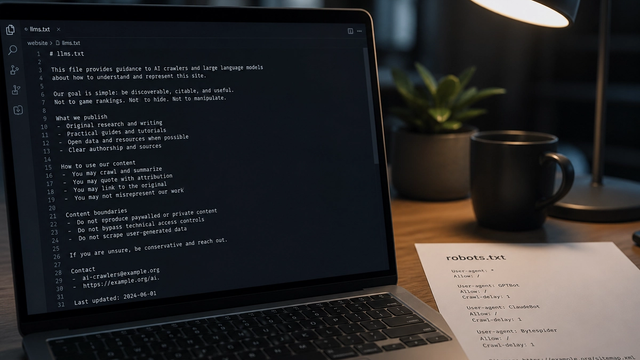
Older articleHow to Rank in AI Overviews Without Chasing ShortcutsNewer articlellms.txt for SEO: Does It Help AI Search Visibility?

Related